Biomedical Signal and Health Data Analysis
TSI overcomes patient-to-patient calibration issues in clinical data by focusing directly on structural patterns rather than amplitude.
1. Long-Term Disease Progression (Blood Tests)
The TSI algorithm perceives deteriorations in patients' long-term blood values (WBC, Glucose, ALT) as "Trend Stress" (MIA), independently of reference ranges.
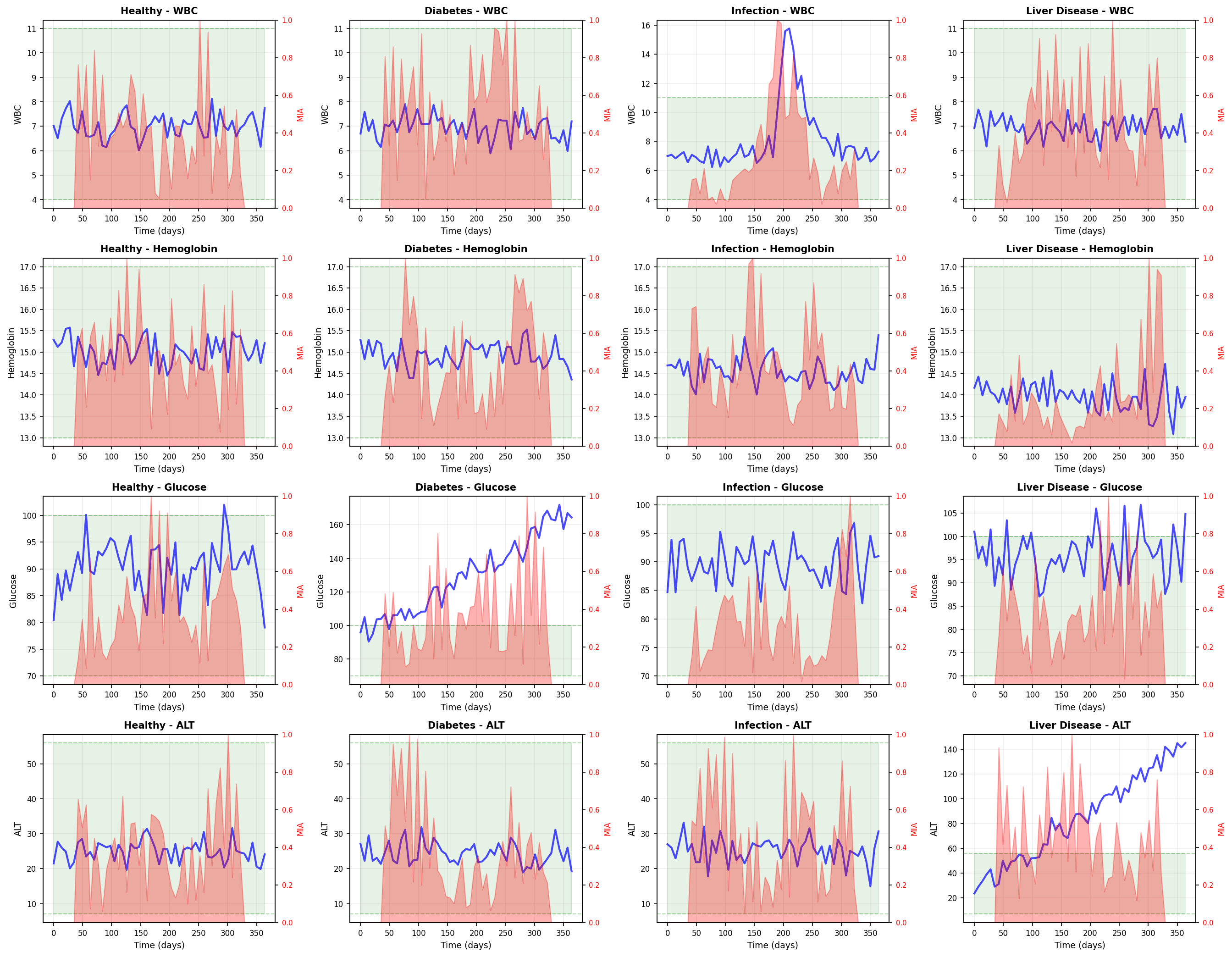 Figure: Compared to healthy individuals; the dramatic spikes in the MIA (Disease Stress) area, shown in red, created by TSI during the development of Infection (WBC), Diabetes (Glucose), and Liver Disease (ALT).
2. Neurological Patterns (EEG Dataset)
Our algorithm operates independently of the signal quality from clinical devices.
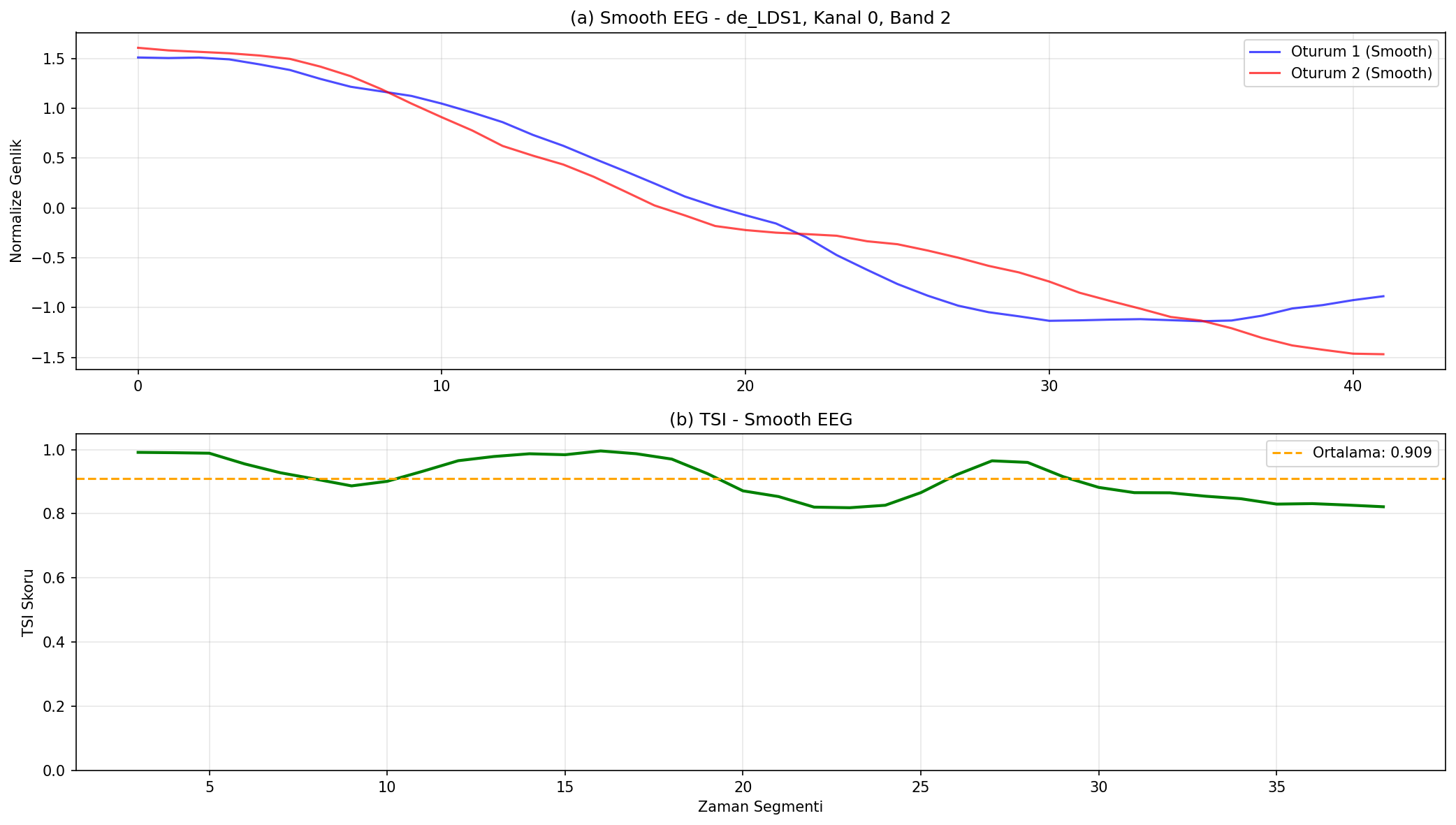 Figure: TSI demonstrating a high structural matching score of 0.909 on average across raw and smooth EEG signals taken from the SEED-IV dataset.